Comuna 13 sits on the steep western hills of the Aburrá Valley in Medellín, Colombia. Once controlled by cartels and guerrillas, the neighborhood now draws 90,000 monthly visitors to its outdoor escalators and street murals.
Six flights of outdoor electric escalators cut through the steep brick hillsides of Comuna 13. This western Medellín neighborhood packs 160,000 residents into narrow, winding alleys overlooking the Aburrá Valley at 1,495 meters above sea level. Precarious homes stack tightly against the Andes Mountains, sharing retaining walls and corrugated roofs. High humidity and low clouds frequently roll through the district, altering visibility by the hour. Tourists navigate the steep concrete paths to view massive street murals and watch breakdance crews perform under iron canopies. The escalators run daily, pulling a constant stream of visitors up the 384-meter incline.
The area operates as an open-air gallery spanning the Las Independencias and Veinte de Julio sectors. Local artists paint large-scale works across retaining walls and building facades, documenting the district's violent past and current stability. Visitors walk past artisan stalls selling frozen green mango popsicles seasoned with salt and fresh lime juice. Tucked away in the alleys, Casa Neón hands guests 3D glasses to view ultraviolet paintings glowing under blacklight. The smell of frying empanadas mixes with the scent of aerosol paint. Music blasts from portable speakers at nearly every corner, creating a dense wall of sound that follows you up the mountain. The public transit system links directly to the area. Metro Line B terminates at San Javier station, where visitors walk 20 minutes uphill or catch a green feeder bus to the base of the escalators.
Navigating the terrain requires sustained physical effort. Weekend crowds swell the narrow walkways, bringing up to 90,000 visitors a month. Heavy afternoon rain turns the uneven concrete steps slick, creating serious slip hazards. The 32°C heat makes the 15-story climbs exhausting for anyone venturing beyond the mechanical escalators. Arriving at 9:00 am on a Tuesday lets you bypass the worst bottlenecks and the midday sun. Book a local guide through Casa Kolacho or Zippy Tours to navigate the maze safely, understand the complex mural symbolism, and keep your money circulating directly within the community. Do not bring large backpacks or flashy watches, as pickpockets target distracted tourists near the main viewpoints.
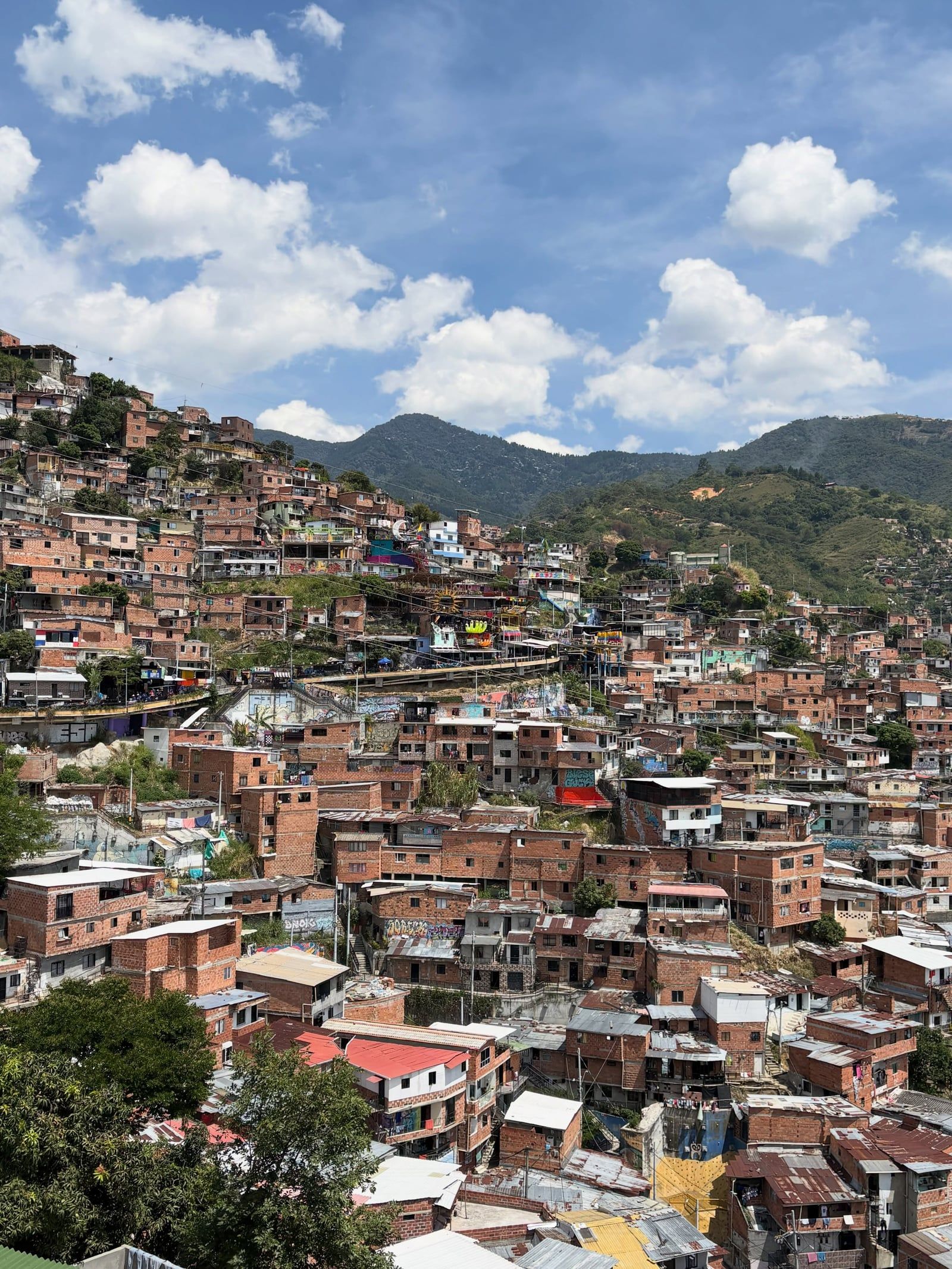
Farmers established Las Granjas in the 1800s on the western edge of Medellín. The area shifted to residential cooperative housing by 1946 as the city expanded outward. The cooperative project initially provided stable homes for working-class families. However, the rapid influx of refugees in the following decades overwhelmed the minimal infrastructure. Waves of displaced families fled rural violence in Antioquia during the 1960s, 1970s, and 1980s, building illegal settlements directly onto the steep slopes. They constructed homes using scavenged bricks and scrap metal, forming a dense, unplanned labyrinth. City officials ignored the expanding settlements, refusing to pave roads or install water lines. The elevated topography gave residents a clear view of the valley below. By the late 1980s, Pablo Escobar’s cartel recognized the strategic value of these sightlines. Criminals used the maze-like alleys to move weapons and drugs, earning the district the title "La Cuna de Pablo Escobar." Police rarely entered the upper sectors, leaving the residents entirely at the mercy of organized crime syndicates. The lack of paved roads meant authorities could not drive vehicles into the neighborhood, forcing them to abandon the territory to the cartels.
Escobar died in 1993, but the violence only escalated. Leftist guerrilla groups, including the FARC and ELN, immediately seized the power vacuum. Urban militias took control of the neighborhood, dictating daily life, extorting local businesses, and clashing with rival paramilitary factions. The Colombian government responded with extreme force in 2002. President Álvaro Uribe launched Operation Mariscal in May, followed quickly by the massive Operation Orion on October 16. More than 1,500 government troops stormed the hillsides alongside tanks and helicopters. Black Hawk gunships fired directly into residential blocks. The four-day siege resulted in at least 70 executions and nearly 300 forced disappearances. Bullet holes still mark several original brick facades near the upper viewpoints, left intentionally by homeowners to document the assault. The military handed control of the area to right-wing paramilitaries, who continued a quiet campaign of assassinations for years afterward.
City planners initiated a massive public works project in 2011 to integrate the isolated district into the formal city grid. Engineers installed 384 meters of outdoor electric escalators directly into the mountainside. The $5 million project replaced 350 concrete steps. A grueling 30-minute climb shrank to a six-minute ride. This physical connection broke the neighborhood's isolation and allowed emergency services to reach the upper sectors. Local youth groups simultaneously reclaimed the streets through hip-hop and graffiti, painting over gang territory markers with murals depicting local leaders and white flags. Today, visitors ride the San Javier Metrocable for aerial views of the transformed district before walking down to the Museo Casa de la Memoria to view the personal archives of the conflict's survivors. The escalators operate as a global model for urban integration, proving that infrastructure can directly reduce violence.
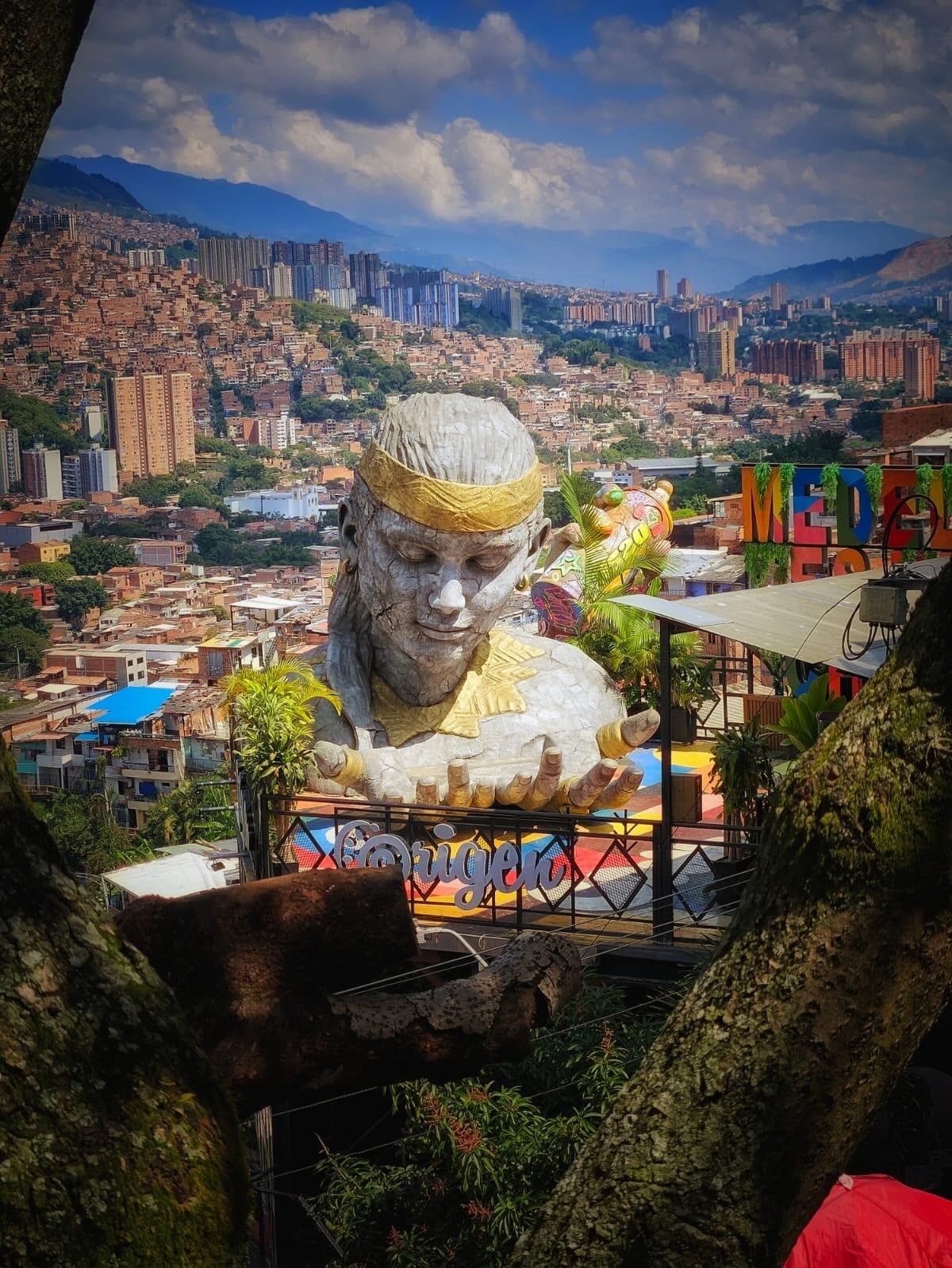
Precarious brick houses stack vertically up the western slopes of the Andes Mountains. The physical layout of Comuna 13 forces buildings to share retaining walls, foundations, and rooftops. Narrow alleys zigzag between the structures, creating a dense labyrinth originally designed without city planning or formal engineering. The district sits at an altitude of 1,495 meters, exposing it to rapid weather shifts. Low clouds frequently trap humidity against the hillsides, while sudden downpours flood the narrow drainage channels carved into the concrete paths. The lack of flat ground means every public space, from basketball courts to plazas, sits on a constructed terrace supported by massive concrete pillars.
Six interconnected electric escalators form the spine of the neighborhood. The 384-meter system features bright orange roofs to shield riders from heavy rain and intense equatorial sun. The roofs also collect rainwater, directing it away from the mechanical components. Engineers had to reinforce the hillside with deep concrete pylons before installing the heavy machinery, ensuring the slopes would not collapse during seasonal landslides. These moving walkways scale the equivalent of 28 stories, rising at a steady 30-degree incline. Before 2011, residents climbed over 350 uneven, crumbling concrete steps to reach their homes carrying groceries and supplies. The escalators now transport thousands of people daily, reducing a half-hour trek to a smooth six-minute ascent. Concrete plazas connect each flight, providing flat, stable spaces for street performers, food vendors, and community gatherings. Security guards monitor the machinery at each level, ensuring the belts stop immediately if a child trips or an item gets caught in the treads.
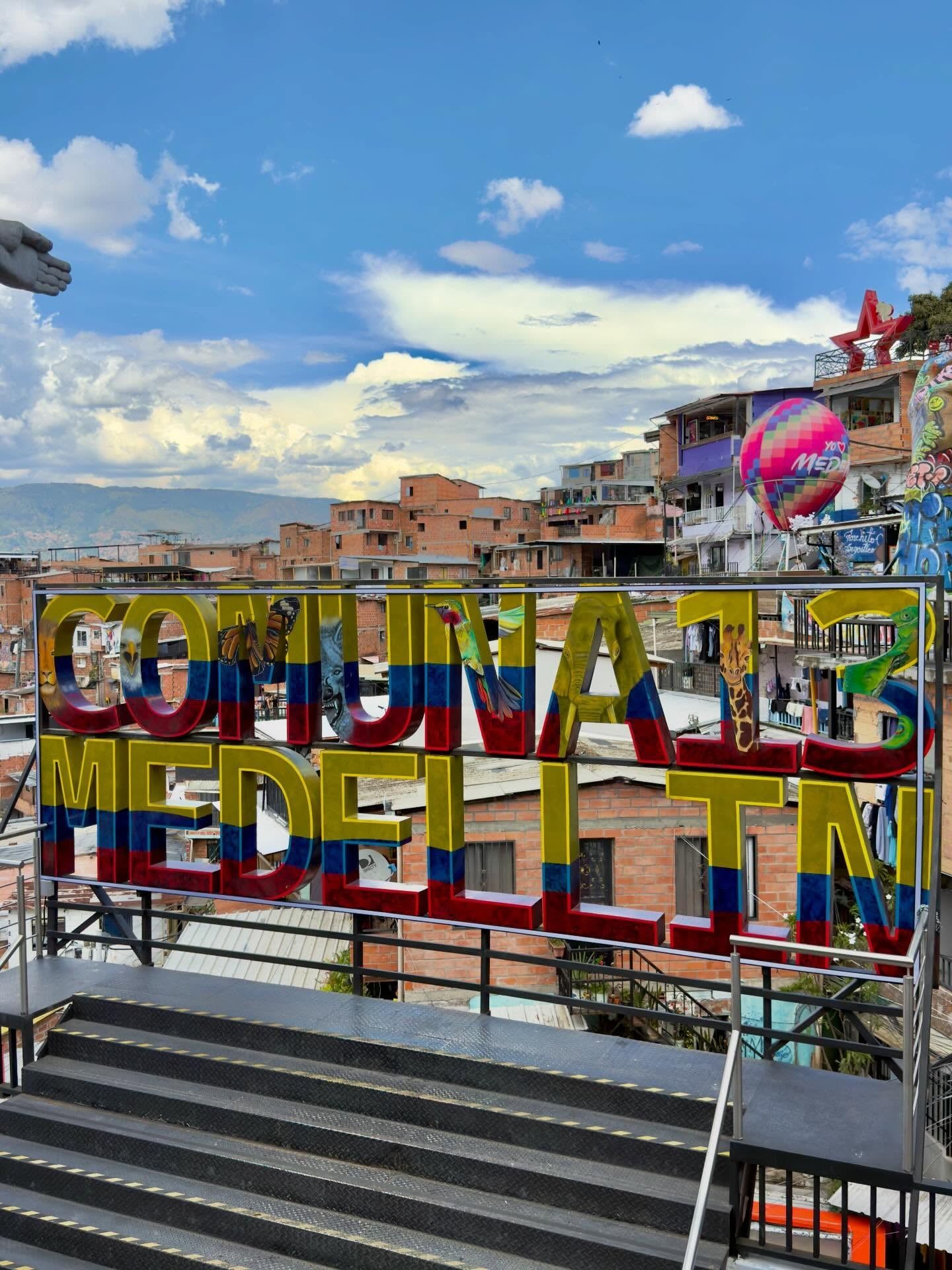
The Mirador de las Letras viewpoint caps the upper section of the escalator system. An oversized, multicolored "Comuna 13" sign stands at the edge of a concrete platform, marking the primary photo location. Visitors look east across the Aburrá Valley to see the downtown skyline and the San Javier Metrocable cars passing overhead. The steep drop-offs lack handrails in several residential sections just beyond the main tourist path. Heavy downpours create fast-moving runoff through the alleys, making the remaining concrete stairs highly dangerous. Wear shoes with aggressive tread if you plan to explore past the main escalator platforms, as the moss-covered concrete remains slick even on dry days.
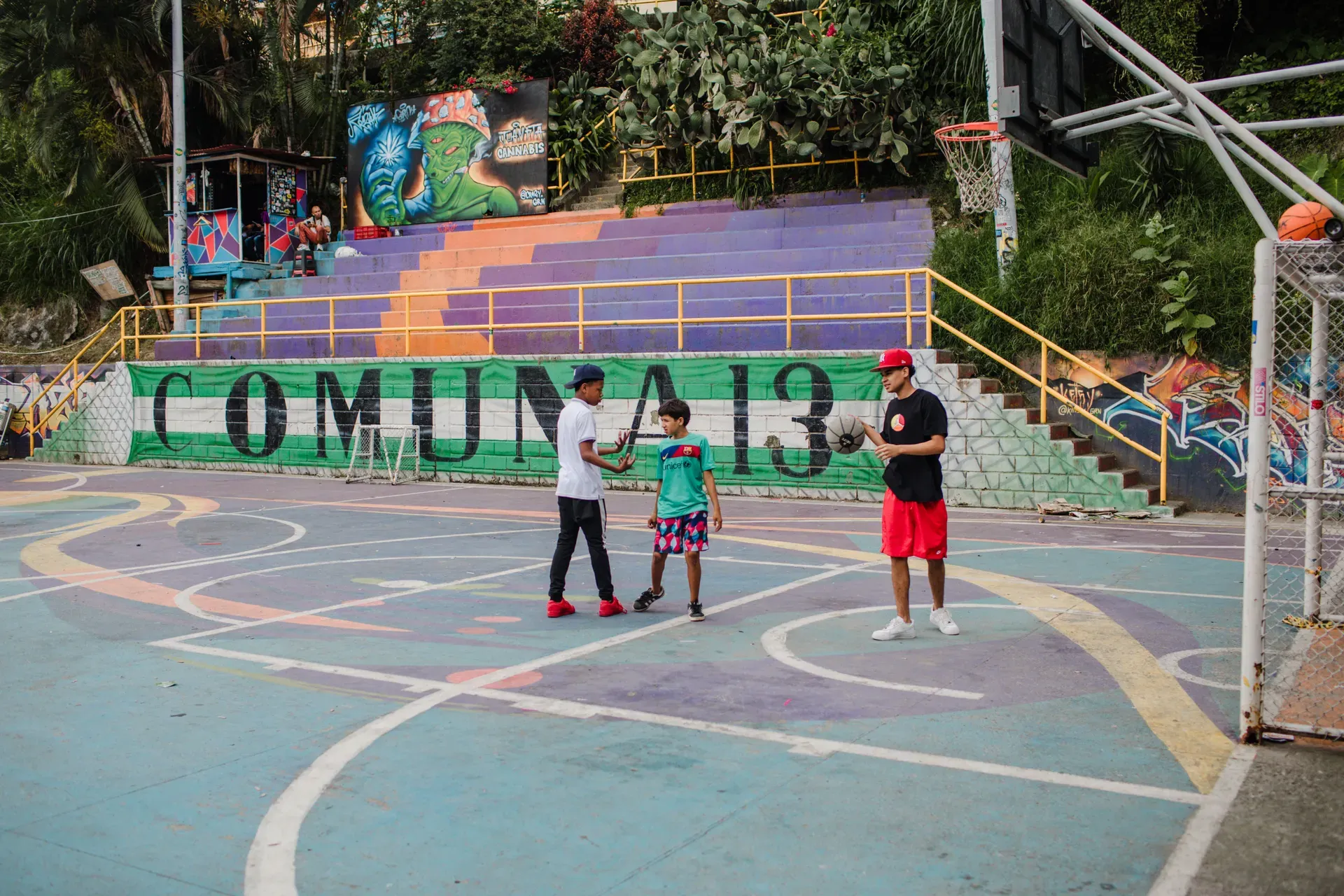
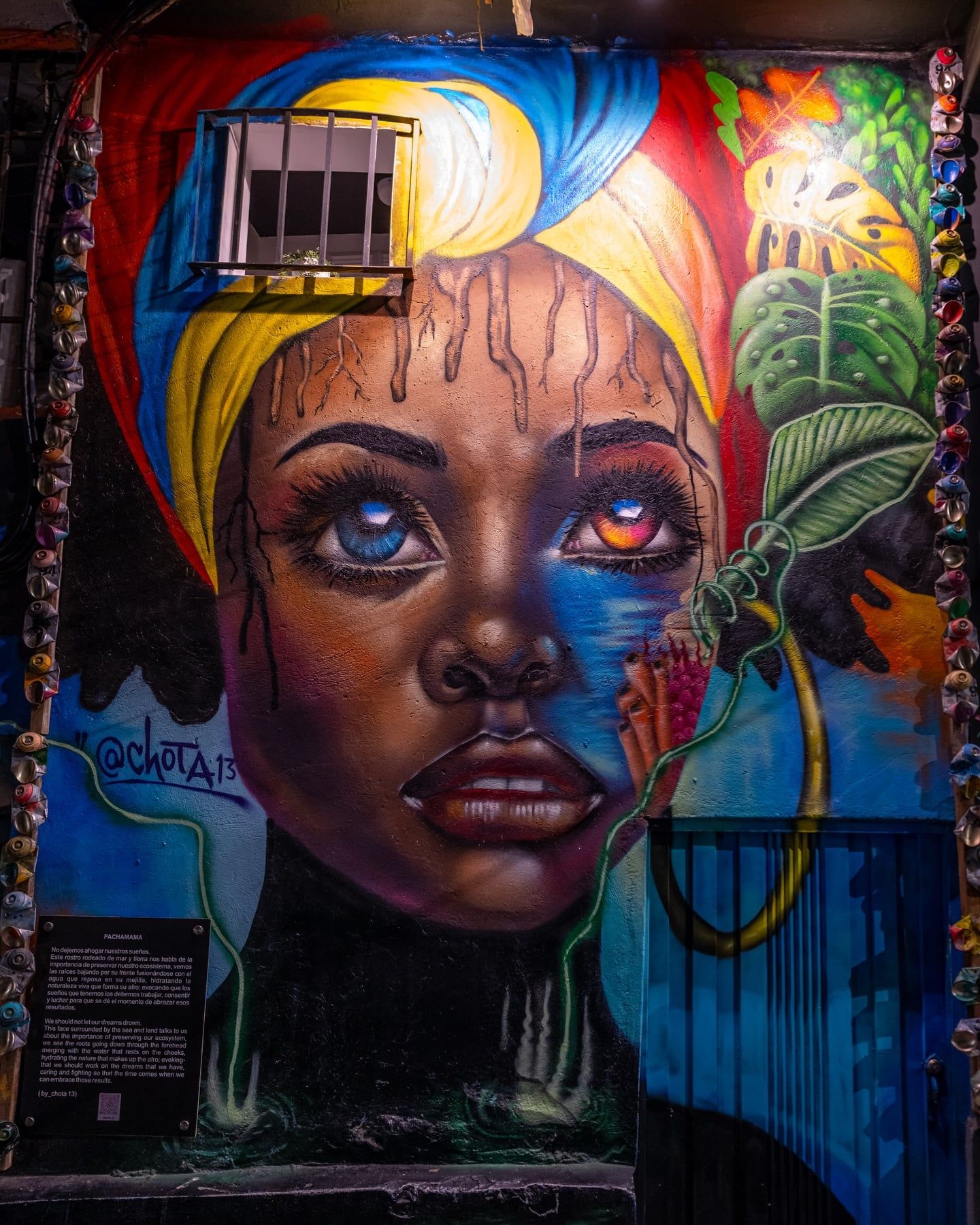
Street art functions as a public archive in Comuna 13. Local artists paint massive murals to document the neighborhood's survival and protest state violence. Elephants frequently appear in the artwork to represent memory and the refusal to forget the disappeared. White birds symbolize peace and the desire for a future free of conflict. Black ribbons mourn the civilian victims of Operation Orion. Many murals incorporate the faces of specific community leaders who died fighting for local rights. The art serves as a visual boundary, marking safe zones where rival gangs agree not to initiate violence. Graffiti is technically illegal in Medellín, so artists secure permission directly from building owners and neighborhood leaders before touching a wall. This approval process ensures the art reflects the community's actual experiences rather than external interpretations. The murals change frequently, with older pieces painted over to make room for new stories, turning the brick walls into a living document.
Hip-hop culture provides a direct alternative to gang recruitment for the district's youth. Collectives organize breakdance battles and rap cyphers under the corrugated roofs of the escalator plazas. The booming beats echo down the narrow alleys, drawing crowds of tourists and locals alike. These performances generate direct income for teenagers who pass hats after their routines, funding dance studios and recording equipment. The music specifically addresses the neighborhood's history, transforming trauma into rhythmic storytelling. Breakdancing requires intense physical discipline, giving teenagers a structured outlet in an area where recreational facilities remain scarce. Local guides, many of whom grew up during the worst years of the conflict, translate these visual codes and lyrics for visitors.
The community enforces strict internal rules regarding its history and how outsiders interact with it. Residents fiercely reject the glorification of cartel violence. Wearing Pablo Escobar merchandise deeply offends the locals who survived the bombings and assassinations of the 1980s and 1990s. Guides actively steer conversations away from drug lords and focus on the neighborhood's resilience. Giving cash directly to children is also strongly discouraged by community leaders, as it incentivizes skipping school to beg from the 90,000 tourists who arrive each month. Visitors support the local economy instead by purchasing art, tipping performers, and buying food from established vendors. Buy a crema de mango biche from a local stall to contribute to a family's income without disrupting the social fabric.
The outdoor escalators replace a 28-story climb with a six-minute ride.
Over 1,500 government troops and helicopters attacked the neighborhood in October 2002.
A local gallery hands out 3D glasses to view ultraviolet paintings under blacklight.
Street vendors sell frozen green mango popsicles seasoned with salt and lime juice.
Locals actively reject Pablo Escobar shirts and consider them highly offensive.
Graffiti artists must get approval from building owners before painting new murals.
The nearby San Javier cable car integrates the steep hills directly into the city's metro grid.
Yes, the neighborhood is safe during daylight hours. Visitors should stick to the main paths, avoid flashy jewelry, and leave before sunset.
Entry to the public streets and escalators is completely free. Guided walking tours typically expect a tip of $12 to $15 USD per person.
The city built a 384-meter system of six interconnected electric escalators in 2011. They replace over 350 steep concrete stairs.
You can walk up from the San Javier Metro station independently. However, local guides provide essential context and help you avoid getting lost in the residential alleys.
In October 2002, the Colombian government launched a massive military assault on the neighborhood. Over 1,500 troops attacked urban militias, resulting in dozens of executions.
Arrive around 9:00 am on a weekday. This helps you avoid the 32°C afternoon heat and the massive weekend crowds.
Take Metro Line B to the San Javier station. From there, walk 20 minutes uphill or catch a green feeder bus to the escalators.
No. Despite the escalators, the extremely steep hills, uneven steps, and narrow alleys make it inaccessible for standard wheelchairs.
The neighborhood's elevated, maze-like layout made it a strategic corridor for drug trafficking in the 1980s. The cartel used the area to move weapons and monitor police.
Wear comfortable walking shoes with excellent grip for the slippery concrete paths. Bring a hat, sunscreen, and lightweight clothing to handle the high humidity and heat.
Browse verified tours with free cancellation and instant confirmation.
Find Tours